Bardac

Drive Repair

Bardac Drive Diagnostics, Repair & Industrial Support

Explore the possibilities

Common Bardac Applications

01.

Machine Control

02.

HVAC

03.

Conveyors

04.

Pumps &
Blowers

About Bardac Drive Systems

Bardac drive systems are used in industrial motor-control applications where dependable speed regulation, energy efficiency, and consistent equipment performance are essential to daily operations.


Control Concepts Dallas services Bardac equipment used throughout machine control, HVAC systems, conveyors, pumps, blowers, mixers, and other demanding motor-control applications.


Our technicians diagnose programming problems, damaged electrical connections, cooling failures, blown fuses, breaker trips, circuit-board faults, and problems involving connected motors. We inspect and test drive components, back up existing settings when appropriate, and verify operation through controlled power-up and functional motor testing.

Equipment we service includes:

01.

P2 Series Drives

02.

V3 Series Drives

03.

E3 Series Drives

04.

PL Series DC Drives

05.

K-Series DC Drives

06.

Servo & Analog DC Drives

Complete Automation Services

From troubleshooting and repair to ongoing automation support, our technicians help keep critical systems operating reliably.

Diagnostics
Repair
Automation Support
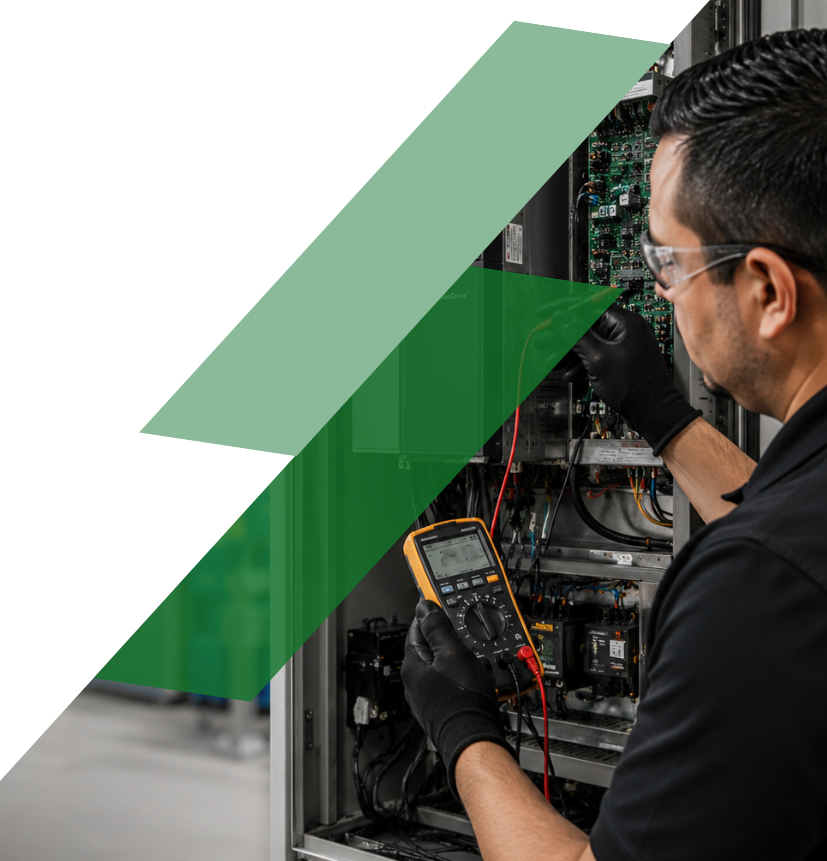
Technician diagnosing and repairing a Danfoss industrial drive inside an electrical control panel.

Common Bardac Drive Symptoms

01.

Program
Faults

02.

Fan
Failure

03.

Connection Faults

04.

Motor Won’t
Run

05.

Blown
Fuses

06.

Board
Faults

The Repair Process

When a Bardac drive develops a problem, Control Concepts Dallas evaluates the equipment and surrounding operating conditions to determine whether the issue originates within the drive or elsewhere in the application.

Our technicians review incoming power, fault history, drive settings, electrical connections, cooling components, connected motors, and mechanical loads. Before applying power, we inspect and test the input and output power sections, back up existing settings when appropriate, and verify operation through controlled power-up and motor testing.

Once the cause is identified, we determine whether repair or component replacement is the most practical solution. Proper ventilation, clean operating conditions, moisture protection, secure electrical connections, and periodic inspections can also help reduce future problems.

Most drive failures can be avoided through preventative maintenance.