EMS

Product Repair

EMS Diagnostics, Repair & Industrial Support

Explore the possibilities

Common EMS Applications

01.

Industrial Automation

02.

Commercial
HVAC

03.

Machine
Control

04.

Motor
Control

About EMS
Control Systems

EMS Industrial products have long been used in low-voltage motor-control applications where reliable motor starting, stopping, equipment protection, and process operation are essential.


Many EMS products are now considered legacy equipment but remain installed in industrial automation, commercial HVAC, machinery, and motor-control systems. Control Concepts Dallas supports these components through diagnostics, repair, replacement support, and onsite troubleshooting.


Our technicians evaluate electrical faults, damaged control components, wiring problems, thermal damage, and conditions involving connected motors or equipment. We can also help determine whether repair, replacement, retrofit, or modernization is the most practical path forward.

Equipment we service includes:

01.

AC Motor Drives

02.

Soft Starters

03.

Motor Brakes

04.

Heater & Phase Controllers

05.

Protection Modules

06.

Panel Control Hardware

Complete Automation Services

From troubleshooting and repair to ongoing automation support, our technicians help keep critical systems operating reliably.

Diagnostics
Repair
Automation Support
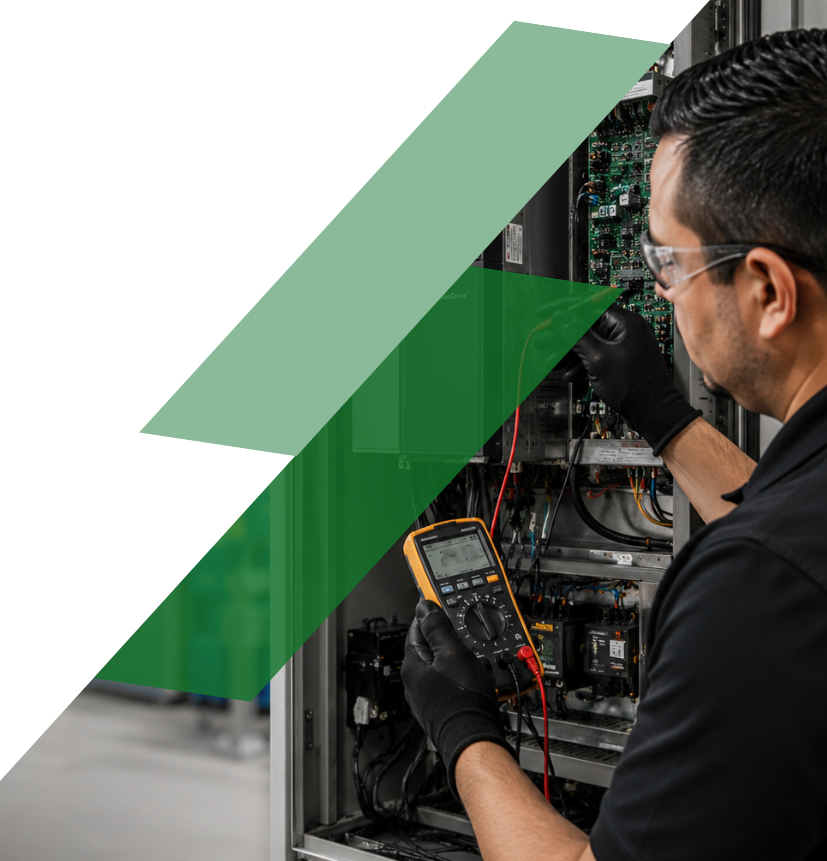
Technician diagnosing and repairing a Danfoss industrial drive inside an electrical control panel.

Common EMS System Symptoms

01.

Startup
Failures

02.

Brake
Failures

03.

Module
Faults

04.

Thermal Damage

05.

Wiring
Faults

06.

Drive
Faults

The Repair Process

When an EMS motor-control component develops a problem, Control Concepts Dallas evaluates the equipment and surrounding operating conditions to determine whether the issue originates within the EMS component or elsewhere in the application.

Our technicians inspect incoming power, wiring, connections, control modules, internal components, and signs of overload, short-circuit, or heat damage. When practical, damaged components are repaired or replaced, followed by controlled power-up and testing under simulated operating conditions.

When repairing the existing equipment is no longer practical, we can help evaluate replacement, retrofit, or modernization options for the surrounding motor-control system.

Many control system failures can be avoided through preventative maintenance.