FANUC

Robotics Repair

FANUC Robotics Diagnostics, Repair & Industrial Support

Explore the possibilities

Common FANUC Applications

01.

Automotive
Assembly

02.

Aerospace
Production

03.

Electronics
Assembly

04.

Metal
Fabrication

About FANUC
Robotic Systems

FANUC robotic systems are used in industrial applications where precise motion, repeatable operation, and dependable machine automation are essential to production.


Control Concepts Dallas diagnoses and repairs FANUC robots and related control equipment used in assembly, welding, material handling, packaging, machine tending, and other demanding automation environments.


Our technicians evaluate controller faults, servo and motion problems, communication failures, encoder issues, and conditions involving connected equipment. We can also help determine whether repair, replacement, retrofit, or modernization is the most practical path forward.

Equipment we service includes:

01.

Six-Axis Robots

02.

Collaborative Robots

03.

Robot Controllers

04.

Servo Systems

05.

Motion Control Systems

06.

iRVision Systems

Complete Automation Services

From troubleshooting and repair to ongoing automation support, our technicians help keep critical systems operating reliably.

Diagnostics
Repair
Automation Support
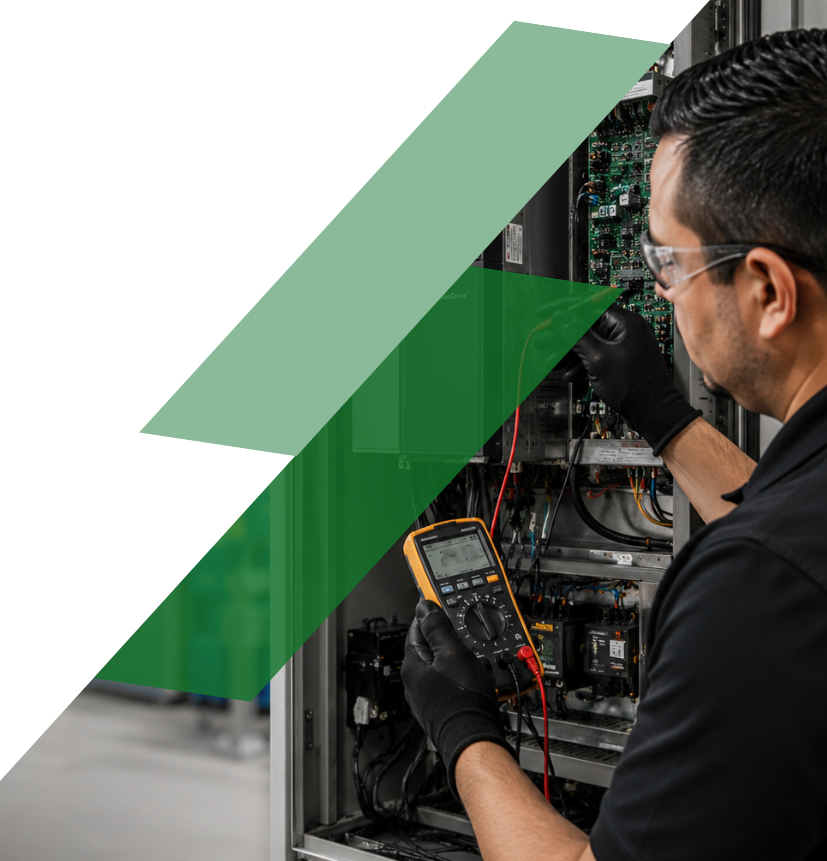
Technician diagnosing and repairing a Danfoss industrial drive inside an electrical control panel.

Common FANUC System Symptoms

01.

Robot
Faults

02.

Servo
Alarms

03.

Controller
Errors

04.

Communication
Faults

05.

Encoder
Failures

06.

Positioning
Errors

The Repair Process

When a FANUC robotic system develops a problem, Control Concepts Dallas evaluates the equipment and surrounding operating conditions to determine whether the issue originates within the FANUC system or elsewhere in the application.

Our technicians review controller diagnostics, servo operation, motion performance, encoder and sensor feedback, communication networks, and connected automation equipment. Once the cause is identified, we determine whether repair, component replacement, retrofit, or modernization is the most practical solution.

After repairs are completed, the system is tested to verify proper communication, movement, positioning, and operating response before being returned to service.

Many automation system failures can be avoided through preventative maintenance.